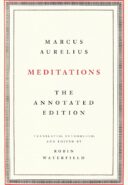
Imagine being the most powerful man in the world.
You command armies. You rule an empire stretching across continents. Millions of people are subject to your decisions.
And at night, you sit alone, writing little reminders to yourself about how to be a better human being.
That’s Marcus Aurelius.
He was emperor of Rome nearly two thousand years ago, during a time of wars, political turmoil, and devastating plagues.
And yet, what fascinates me about Marcus isn’t his power. It’s what he did when he was alone with his thoughts.
He wrote what we now know as Meditations. Not for publication. Not to impress anyone. These were private reflections, reminders to himself about patience, courage, humility, and how to respond when life doesn’t cooperate.
There’s an image he uses that I love. He tells himself to be like a rocky headland against which the waves keep crashing. The waves come, but the rock remains.
Now, I don’t know about you, but there are days when I feel less like the rock and more like one of those waves.
But Marcus wasn’t suggesting that we could control everything that happened to us.
Quite the opposite.
His philosophy was that we have limited control over the world, but we can work on how we respond to it.
And what I find remarkable is that here was a man with enormous authority who still had to remind himself to be patient, to be kind, to stop worrying about other people’s opinions.
Two thousand years later, we’re still wrestling with exactly the same things.
Maybe that’s why his words have endured. Not because he was an emperor, but because, underneath all that power, he was a human being trying to figure out how to live.