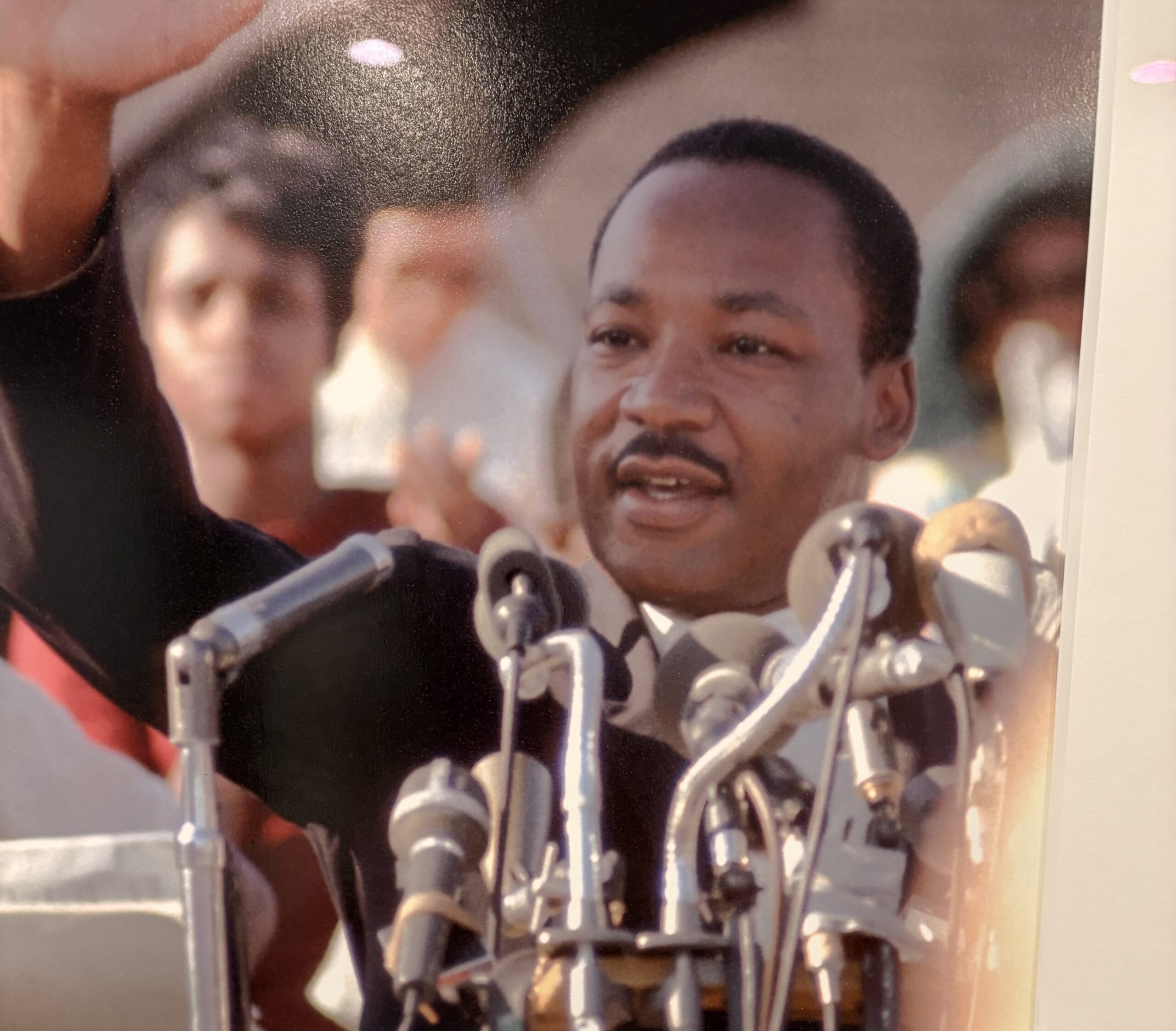
As we paid tribute to Dr. Martin Luther King last month, I found myself, again, thinking about the impact of words on our lives.
Recently, I came across a fascinating article about Patrick Henry in The Atlantic, part of a broader focus on this year’s 250th anniversary of the American Revolution.
Patrick Henry is remembered as the most powerful speaker of that era, hands down, by his fellow founders, including Benjamin Franklin and Thomas Jefferson. John Adams declared Henry, “the revolution’s consummate persuader.”
And yet, we don’t actually have Henry’s words. He didn’t write his speeches down.
He spoke extemporaneously. People who heard him were so moved that they failed to record what he said, even reporters. What survives instead are secondhand accounts, including descriptions of his voice, his gestures, the way he made people feel what was at stake. One observer described an “irresistible force” to his speaking, something no description could fully convey to someone who hadn’t been there.
And that most famous speech, “Give me liberty, or give me death”? Well, it was reconstructed years later from someone else’s memory.
Henry’s words helped ignite a revolution built on the ideas of justice, self-determination, and freedom.
And yet, those same ideals did not extend to the more than 2 million human beings who were enslaved.
His oratory would move a country forward while leaving deep injustices intact.
Nearly a century later, Abraham Lincoln stood in another moment when the country was being forced to reckon with what its founding words actually meant.
When I was a kid, my family spent many summers in Washington, D.C.—my dad was from there, and the monuments were a familiar part of our vacations, especially in 1976, during the bicentennial. But the experience that lives most vividly in my memory is standing at the Lincoln Memorial, staring up.
My little girl self seeing that enormous human figure, seated and solemn. The Gettysburg Address carved into the walls, rising impossibly high as I craned my neck up to read the words. Walking down the stone steps afterward toward the Reflecting Pool, overwhelmed by the gravity of what Lincoln had given his life to make real—that this country might live up to the ideal that all people are created equal.
Even now, writing this, it makes me tear up.
Years later, I returned to that same place under different circumstances. My husband Bill and I had been married just a couple of years, no kids yet, when we helped my sister Cat move from Elmhurst to Washington, D.C. Along with my brother Mike, we loaded a moving van and made the drive east. Before heading back, we squeezed in a few hours to visit some of the monuments.
We stood again at the Lincoln Memorial—this time knowing Cat was about to begin a career that would place her squarely inside the long, unfinished work Lincoln named and Dr. King demanded we continue.
Cat had already spent several years working at HOPE Fair Housing in Lombard, where she was hired and mentored by Bernie Kleina. Bernie was the first person to hire her in civil rights, the one who encouraged her to take the leap to Washington to work for the National Fair Housing Alliance when the opportunity arose. Bernie is also an amazing photographer who captured many images from the civil rights era.
Not long before Dr. King was assassinated, Bernie took a photograph of him. Years later, Cat was awarded that photograph—mounted with a plaque honoring her twenty-five years of service at NFHA. Today, that photograph hangs in Cat’s home office, watching over her work.
Thirty-five years later, Cat is still advocating for fair housing, fair lending, and equal treatment in a country that promises those rights in its very foundation yet still struggles to deliver them.
Dr. King understood something Patrick Henry could not fully confront: that powerful words alone do not excuse what we fail to do next.
Dr. King famously said, “The arc of the moral universe is long, but it bends toward justice.” But he was also clear, throughout his life and work, that the arc does not bend on its own. It bends because people move it. Through struggle. Through sacrifice. Through tireless, often unrecognized effort.
That’s the part of the story that matters most to me now.
Not how powerful words sound but whether they are used to tell the truth and to protect people.
As we celebrate our history again, I find myself still thinking about the power of words.
Are our words helping us live up to what we say we believe? Are they advocating for justice and truth—and for all the people our founding ideals claim to uphold?
That feels like the work of this moment and the work of this day.
Leave a Reply